3 components of service design:
- People: create & use the service
- Props: artifacts
- Processes: workflows, procedures
According to the authors of Service Design From Insight to Implementation, services can be grouped into 3 primary spheres:
- Care: caring for people or things
- Access: provide temporary use of something (transportation, utilities, subscriptions)
- Response: respond to people’s needs (store assistant, insurance)
Keep in mind:
- User privacy & data protection
- Accessibility & inclusivity
- Social impact, environmental sustainability, & equity
- Fairness, transparency, & accountability
Service design process
Research
Research the business:
- objectives
- competitors, trends, customer preferences
- servce blueprint
Research users:
- needs, preferences, behaviors
- personas
- journey & touchpoints
Ideation
- Conduct ideation sessions with brainstorming activities
- Filter & prioritize ideas
- Develop concepts
Prototyping & testing
- Create physical or digital prototype
- Test and refine based on feedback
Implementation
- Communicate changes to stakeholders
- Apply across all touchpoints
- Training staff
- Develop/update software
- Manage the development process
- Design & implement a scalable, secure, and reliable technical infrastructure
Evaluation & iteration
- Gather feedback
- Analyze data
- Identify pain points
- Iterate and improve
Business Model Canvas
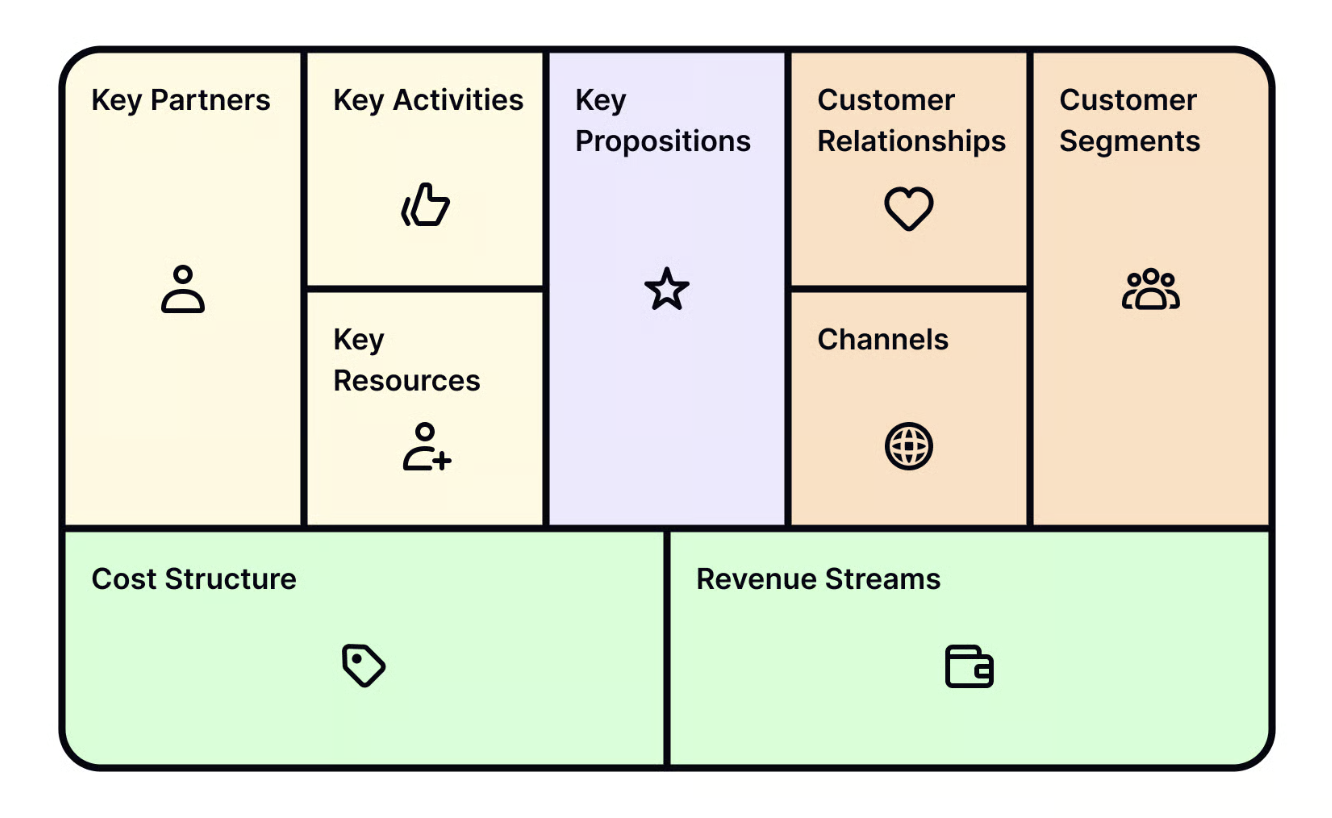
9 building blocks are related to each other.
- Value proposition
- Customer segments: personas & system maps that visualize touchpoints
- Channels
- Customer relationships
- Revenue streams
- Key resources
- Key activities: behind-the-scenes processes
- Key partners
- Cost structure
Core principles
- Human-centered: consider everyone affected by the service, not just users
- Collaborative
- Iterative
- Sequential: service experiences should comprise a series of interconnected touchpoints
- Real: real users, needs, context, environment
- Holistic: services should be designed in a comprehensive and integrated way, considering all aspects of the service experience
Research planning
Identify participants
Probability sampling means each member of the population has an equal chance of being selected:
- Simple random sampling
- Systematic random sampling: Selecting every *N-*th person from a flow of people
- Stratified random sampling: Dividing the population into groups based on specific criteria and randomly selecting participants within these groups
- Cluster sampling: Creating a list of clusters based on specific criteria and randomly selecting some of these clusters, then randomly selecting participants within the selected clusters
Non-probability sampling involves selecting participants based on subjective criteria and is used in qualitative research:
- Convenience sampling: Selecting participants who are readily available
- Self-selective sampling: Participants voluntarily choose to participate in a study without specific criteria
- Snowball sampling: Participants recommend others who meet specific criteria
- Extreme case sampling: Selecting participants who represent extreme or unusual positions
- Emergent sampling: Following new leads during fieldwork
- Maximum-input sampling: Selecting participants with a comprehensive overview of an entire experience or system to get a maximum of input from them
Select research methods
Triangulation: use mixed methods to improve accuracy.
- Desk research
- Self-ethnographic approaches
- Participant approaches
- Non-participant approaches
- Co-creative workshops
Verify research tools
- Pilot-test tools with a small sample
- Get review from experts
- Test with the same group at different times
- Cognitive interviews to identify confusion or misunderstanding
Quantitative vs qualitative data analysis
Quantitative data analysis is often used to measure satisfaction and effectiveness:
- Descriptive statistics
- Correlation analysis
- Regression analysis
- Hypothesis testing
Qualitative data analysis is often used to gain insights into experiences and behaviors.
- Content analysis: examine content of communications to get trends and insights
- Thematic analysis: find recurring themes or patterns
- Discourse analysis: examine language, context, social norms
- Narrative analysis
Customer journey mapping for service design
A customer journey map is a visual representation of the steps customers take when they interact with a product, service, or brand.
- Main actor: persona
- Phases: awareness, consideration, purchase, onboarding, engagement, support, loyalty
- Actions: physical (fill out form, click button) or emotional (feel satisfied, feel frustrated)
- Storyboards
- Emotional journeys: how users feel at each stage
- Channels
- Stakeholders
- Backstage processes
- What if?: what could go wrong and how to prevent/solve
- Jobs to be done: understanding the underlying motivations and needs of customers when they use a product/service
Build service design prototypes
Explorative prototyping
References
Notes taken from Uxcel course